Showing posts with label Differentiated Instruction. Show all posts

Monday, May 19, 2014

Keep Calm and WOOSAH! And, A Multiplication Treat : )


Well hello there! My has it been quite some time since I had any time to sit and just blog! This was a very busy year. In fact busy is an understatement. Aside from regular "teacher busy", I took on a second course at Temple University so I was instructing two undergrad classes Jan-May. As if that wasn't enough, I also published a second book! Yup- Ziggie Tales: Ziggie's Big Adventure! It was released in April and it has been keeping me busy every weekend since. I'll blog about that soon!

So...this was my first year teaching second grade and I made the majority of the resources that I used with my students. If I didn't make it myself, I bought it on TPT!  I hope to blog about some of my favorites as the year winds down.  Right now I am working on an interactive multiplication unit. If you are familiar with my teaching style, then you already know that I am a hands-on teacher. So, when I teach, the majority of my follow-up activities are learning games, flashcards, task cards, etc. The multiplication unit, iMultiply, is by far one of my favorites.....but every time I create something "different and/or new" it quickly becomes my new favorite. I wanted to get back to blogging but I didn't want to wait until I was finished this resource to start talking about it. So I decided to post it as a freebie until I am finished making it. The way I plan on sharing this is- each week or every couple of days I will upload different parts of this resource as I finish it. It will be free in my TPT store while I am adding to it. If you come visit my blog every few days, you will likely get the chance to download the entire resource for free. Once it is complete, I will give it a price. Until then- help yourself. In fact- feel free to share suggestions and feedback on ways I can make this resource better and if possible I tweak it to better meet the needs of my readers.

Can I just say I love the name...
*Free for a limited time! 

I threw a few different themes around and I was actually going to go with a super hero theme- but then I came across one of my favorite clip art sets- made by Zip-a-dee-doo-dah Designs- and remembered had I a similar clip art set made by Ashley Hughes and BOOM a theme was born! 

Technology is the new rave in my class anyway- this theme is perfect. When I showed my class the items we were going to use to make our lap books- they were super excited! Day 1 of the theme being used in my class is posted in pics below. Unfortunately but fortunately my students spent the entire math block assembling their lap books so I didn't have time to introduce the skill just yet. I had a feeling they were going to take longer than normal- we had a chatty chatty morning- which is why I just focused on them putting together our lap books first. Now that that is all done, I can dive right into the lesson on Wednesday (tomorrow is Election Day- no school for kids/PD day for teachers).  I have a variety of activities that I am going to use to introduce the skill along with an anchor chart and some manipulatives. In the section of the resource I am sharing this week I am focusing on the twos and threes. I have a game, flashcards, pieces for the lap book, and acidity sheets for this week. Hopefully on Wednesday evening I can share highlights from lesson and possibly additional resources. Tonight, feel free to download what I have completed so far. My goal is to add 4 and 5 facts on Sunday or Monday evening. 

After you download this resource, feel free to leave me a comment below. Let me know how you like it and if there is anything you want to see added to this resource. 

Day 1: Making our lap books!
Download this resource while it is free HERE!


This is the inside of the lap book. On the right hand side there are two iPods that highlight strategies and keywords. On the left hand side there is an iPad with a multiplication chart on the inside. 


This is the bad of the lap book. Stapled on the lefthand side are the multiplication facts for the twos and threes- twos are on the bottom. As we learn new facts, they will be stapled to the top of the pile. On the righthand side there are the multiples of both 2's and 3's. I will highlight how I use these on my next post. Students can reference these as needed. Especially when self-checking independent tasks/activities, answers given in a game, etc.


This is the front of the folder. As students master each fact they can color in the app! Mastery is 100%. I love this page- the students were excited too.


CLICK HERE TO DOWNLOAD


Are you looking for multiplication games? Check out my MULTIPLICATION AND DIVISION FILE FOLDER GAMES BUNDLED. I've decided to reduce the price while I am working on my iMultiply unit. Get it now while it marked down. Over 20 games! 


 Visit my TPT Store

 Visit my TPT Store 
Visit my TPT Store

Enjoy,

 photo thisone.png
Pin It
Visit my TPT for more resources and activities. Be sure to follow my store to get regular updates on new items added to my store. Pre-K, Kindergarten, First, Second, Third, Fourth, Fifth, Sixth, Seventh, Eighth, Ninth, Tenth, Eleventh, Twelfth, Higher Education, Adult Education, Homeschooler, Staff - TeachersPayTeachers.com

Thursday, August 15, 2013

Incorporating Word Study During Your Literacy Block


Don't forget to subscribe to my email list and follow my TPT Store. Please follow me on Blog Lovin' to receive regular updates on my new blog posts.


View Here


I have been working around the clock to finish my first installment of the Word Study Binder Buddy! I came up with the term binder buddy last spring when I was thinking about the different ways to support my students while developing independence. Last spring the Binder Buddies that I created were designed for literacy and math and supported my students with basic terms and concepts. This made for a great reference when necessary and students could refer to it when they needed to. Not only did my students benefit from using them, but they are also the top selling items in my TPT store!


As I prepared for teaching 2nd grade this year, I thought a great deal about how I would teach language skills and phonics. When I taught in the lower grades previously I always used word study. I also used word study as a core component in the tutoring program I developed a few years back. Thinking about my binder buddy concept I decided to develop the Word Study Binder Buddy. My reasoning behind this is because I am not a big fan of worksheets and "chalk and talk". Instead I prefer to build engagement with hands-on/minds-on activities that require students to practice important skills both independently and with guided support when necessary. When I thought about the binder buddy as a resource, I knew I wanted it to be a tool that students could use in school and/or at home. Primarily, I want my students to develop a nightly routine for practicing their word study skills to help improve their reading and writing. The Word Study Binder Buddy comes with materials for a teacher resource binder and a student resource binder. I added everything I thought I would need to start with beginning word study within the first few weeks of school. Right now I only have the Letter Name stage complete. I am hoping to finish the Within Word stage in the next two weeks. I know that I will have students in both stages of development so having both binders completed will provide me with the tools to differentiate instruction.

If you are interested, here is what my word study instruction will look like. 

To  begin, word study is a multi-sensory approach to teaching phonics. By focusing on word patterns, students are taught how to make connections and apply spelling rules instead of memorizing how to spell words in isolation. Word study teaches students how to think about words and how they are read, spelled and written. It encompasses phonics, vocabulary and spelling. Different from the traditional way of teaching spelling, word study provides many opportunities for students to manipulate spelling patterns by sorting words, building new words and identifying sounds based on what they see and/or hear. Word study is great for differentiating instruction, students can work on different levels and patterns as needed. Finally, word study helps to build fluency and automaticity in students' reading and writing. Students enjoy word study activities. 


Introducing the sort (word walk): Begin by holding up each word card and ask the students to identify the word that they see. Ask the student to tell you what the words mean. This also helps to build vocabulary and informally assess their prior knowledge. Encourage students to give you alternative words for each word they discuss during this activity. Throughout this process, students’ vocabulary will continue to grow.
Next, model the sort for the student/group by placing flat a key word for each of the highlighted word patterns/categories.  Take a card from the pile and say it out loud with an emphasis on the word pattern. Model for the students how you will match the sound in this word card to one of the key words. Think out loud for your students and demonstrate how you match the words correctly. As you sort the word cards, be sure to say the entire list after adding a word. For example, when placing the word had under sad, you would reread and point to each word as you read the list by saying sad, had…when you add pad you would point and read: sad, had, pad. This reinforces the pattern for the students and prepares them for self-correcting when necessary.
Before sending students back to their seats, have them complete a practice sort. Correct students as necessary by rereading each key word when an error is made. Emphasize the ending sound and guide students to self-correct. It is a best practice to prompt students to self-check even if a mistake isn’t made to get students in the habit of consistently checking their work. 

Open Sort
An open sort is a sort that requires students to read the word and add it to the appropriate list. They are using visual discrimination when sorting. Students are encouraged to say each word out loud when matching so that they get used to identifying the patterns based on sound.
Blind Sort
This sort does not allow the students to rely on visual cues. Instead they are listening for the word patterns and sorting them based on sound. This sort is done once students show confidence with open sorts. This can be done with the teacher/coach or buddy. If done with a buddy, there should be some sort of self-check guide answer key available.
Writing Sort
Similar to a spelling test, writing sorts are done by writing words under the correct heading/key word. This is done on paper, the cards aren’t sorted for this unless you feel the student needs the additional support (it can be done with the cards to differentiate when necessary). This can be done independently, in a small group or with a buddy. When this is done without the teacher, students should have an answer sheet available to encourage self-checking once the sort is done. *As the student writes, remind them to say the each sound out loud.
Speed Sort
Students love speed sorts; they see this as sort of a contest or game. This type of sort is done once your child displays fluency with sorting words appropriately. By completing a speed sort, students practice automaticity. You can set a timer, or have students race each other. Even when conducting a speed sort, students should read each word before sorting and reread the list after sorting. When conducting the sort with the student, use a signal to indicate a mistake. When a mistake is made, direct your child to remove the card from the list, read the word aloud, read each keyword aloud and then attempt to match the word appropriately. This is to prevent them from guessing. It also encourages them to try to get the word right on the first try.
Word Hunt
When conducting a word hunt, have the students look through current books they are reading to find additional words  that use the features they have been studying.


Here is what my Word Study Binder Buddy (Letter Name Stage) includes: 
View Here

Teacher Resource Binder 
Assessment tools
Master list of all of the word patterns to be sorted in the Letter Name stage
Sounds Boards (short vowel sounds) 
Master copy of student recording forms
Teacher's instructional sorting cards


The teacher's sorting cards can be printed on different colored paper. I got this pocket chart from Target for only a dollar! I will use the smaller charts for students to sort when working independently and my larger pocket charts when working in a small group. 


Student Resource Binder
Parent information and directions on how to conduct sorts at home
Weekly recording log and parent communication log
Student sorting cards for every sort pattern in the letter name stage
Recording forms for sorting
Student data form for recording progress
Dividers for each section of their binder


To support word study instruction, I also made a variety of games that can be played during reading workshop/ center time that reinforce the spelling concepts that students are working on. I will be doing Daily 5 this year and these are some of the games that will be available when students are working with words. The bundled set can be purchased here.

My Flip Book resource is perfect for reinforcing new spelling  concepts immediately after they have been taught.  This resource has all of the short vowel sounds and can be differentiated when necessary. Students can work on this activity independently or in a small group. 
  View Here. Click HERE to purchase the BUNDLED SET
Students can color each picture and add the initial sound.


Once the book is completed, they can flip through to read the different words with a partner.


When necessary, teachers can differentiate by providing students with the word to help support students who need it. 


This file folder game is great for reinforcing spelling sorts after they have been introduced, or to provide additional independent practice. 
  View Here. Click HERE to purchase the BUNDLED SET

There are eight different file folder games in this bundled set that reinforces all of the short vowel sounds.
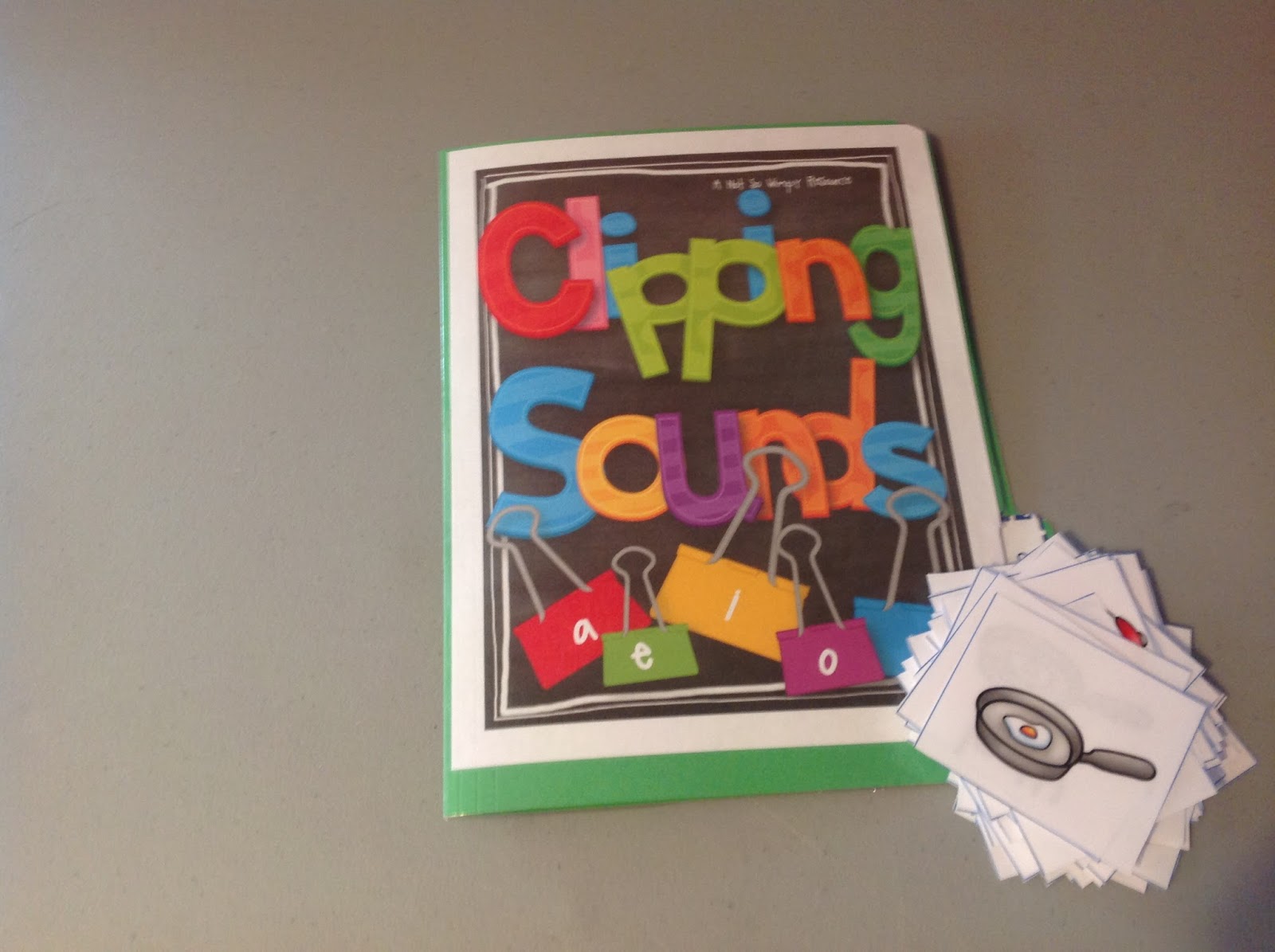
Clipping Sounds is great for discriminating sound. Students complete the sort based on the sound they hear and place their picture cards over the correct short vowel. 


  View Here. Click HERE to purchase the BUNDLED SET

Students can self-check once they are done by matching the word cards and the picture cards. 


 Writing Words is great for students to practice both initial consonant/ blend sounds and short vowel sounds. 

View Here. Click HERE to purchase the BUNDLED SET

 This two-step game provides students the opportunity to write the words they have created in a writing sort. I use a re-usable dry erase pocket for games like this to save on resources. 

 There are three different Writing Words games in this bundled set. 


 Students will love making ice cream sundaes while they practice spelling words! Students use the ice cream scoops to spell the picture on their bowl. 

 They can self-check by matching the banana to their bowl of ice cream! 


View Here. Click HERE to purchase the BUNDLED SET


You can purchase the Word Study Binder Buddy alone or as a bundled set! The bundled set will include all of the games posted above! All of my games are easy to create (simple to print, cut and paste). I understand that even after you purchase this set, you still have to print it out and spend time assembling which is why I offer them at a lower price. 

Enjoy : ) 

 photo thisone.png

Pin It
Visit my TPT for more resources and activities. Be sure to follow my store to get regular updates on new items added to my store. Pre-K, Kindergarten, First, Second, Third, Fourth, Fifth, Sixth, Seventh, Eighth, Ninth, Tenth, Eleventh, Twelfth, Higher Education, Adult Education, Homeschooler, Staff - TeachersPayTeachers.com

Wednesday, August 7, 2013

Your (simple) Guide to Differentiated Instruction


Don't forget to subscribe to my email list and follow my TPT Store. Please follow me on Blog Lovin' to receive regular updates on my new blog posts. 


No two students learn the same and every student enters the classroom with a unique set of skills and experiences. Additionally, every student has individual language skills, background knowledge, readiness to learn and other factors that make their learning needs different from that of their peers. Despite these differences, the expectation is that the teacher responsible for this class has the ability to meet the needs of every student in their class. Successfully meeting the needs of every students begins with meeting each child where they are and strategically guiding them to where they need to be. We call this differentiated instruction.

Differentiated instruction is an approach to teaching that requires teachers to consider the specific needs of each child in their class and designing instruction and a classroom environment that is on their level or compliments a specific learning style. Differentiated instruction is not individual lesson plans for every child in your classroom-- this would be almost impossible in a traditional setting.  It is also more than grouping students according to their math/reading level. Differentiated instruction does however require teachers to tap into the individual interests and strengths of each student and to consider that when planning lessons, activities and units of study. In addition to grouping students for small group instruction, teachers can use a variety of teaching methods and strategies that support the three major learning styles (auditory, tactile/kinesthetic, and visual). Flexible grouping methods are also an important component of differentiated instruction; it promotes peer collaboration while providing appropriate levels of challenge for all students on their independent and instructional level (advanced, proficient, basic, below basic). Flexible grouping also provide several learning options or different paths of learning that promotes inquiry and help students to take in information and make sense of new concepts and skills. When differentiating instruction it is super critical that teachers build on students' background knowledge to make learning meaningful and relevant. Students learn best when they make connections and build on a concept.

Preparing to Differentiate Instruction 
When preparing to differentiate instruction you can follow these steps:


  • Get to know your students. 
    • Compile data using informal/ formal assessments. This will assist you with identifying students' independent and instructional levels. 
    • Use a learning style inventory to learn how your students think they learn best- use informal observations to help identify what learning style(s) students lean toward most. 
    • Have your students complete interest inventories- learn what they like and dislike, what they enjoy, how do they work best, what their subject preferences are, what they like to learn about, etc.
  • Establish a system or routine for differentiated instruction
    • Build in instructional time where students have the flexibility to work independently on their level- think about your center and/workshop schedule. Are you doing Daily 5 or traditional guided reading? Are you going to provide reading workshop time or center time? When will students have an opportunity to work independently or in a small group to practice important skills and what games/activities will they be working on so that this time is purposeful and meaningful? Remember this time can happen several times throughout the day and for varying time limits. For example, during morning work (usually the first 30-45 minutes of the day) students can work independently on a review activity. During this time, you may have a few students on the computer (using a rotating computer schedule). You might listen to a student read, work on last nights math problem with a student who said they had a hard time, do a word sort with your students who need extra support with a concept. The idea is to get the most out of your time throughout the day and to turn "busy" work into "active thinking"  work. 
  • Establish a variety ways to differentiate whole group instruction 
    • Use a variety of graphic organizers, provide verbal and written expectations, use visual aids/ anchor charts, provide "cheat sheets"/ binder buddies with steps and/or skill reminders.
    • When going over important concepts in class, even if you are putting notes on the board or using anchor charts, establish a routine for your lower level students by providing them an outline prior to the lesson that highlights key words, concepts and images if necessary.
    • Refer to word walls, posted anchor charts from previous lessons, notes from previous lessons.
    • Use interactive notebooks to keep students engaged throughout the lesson.
    • Tap into a variety of learning modalities when presenting information to be sure to meet the needs of the various learning styles.
    • Integrate technology-- i.e. video clips, interactive demonstrations, podcast.
    • Plan, gather, create activities in advance that teach to the middle, high and low.
  • Create a culture of independence in your classroom 
    • Establish routines for transitioning in and out of the room and from one activity to the next.
    • Be consistent with the  materials required for each subject.
    • Have classroom systems for sharpening pencils, throwing away trash, going to the bathroom, and moving around the room.
    • Use signals to get students attention.
    • Provide student materials at their reach, label everything and create a system for retrieving and returning supplies.
    • Consistently follow your schedule/ routine (not including emergencies/unexpected hiccups in the routine and assemblies etc.).
    • Keep to your small group and center/workshop schedule, establish a system for setting up and breaking down their work areas.
  • Provide a variety of assessments
    • Use exit slips to get a daily status of the class- use that data to create a quick warm-up (by level is necessary) at the start of your lesson the next day or to group students, assign activities, reteach material, and /or provide individual support.
    • Write the standard on the top of your worksheets- make students aware of what they are expected to be able to do. This helps them become aware of what they know and don't know which is great for elf-reflection and assessment. (check out my post on student-led parent conferences). 
    • When giving a quiz or assessment, write the standard next to each question for the same reason above.
    • Always provide your students with a rubric using common core language for open ended questions, paragraph writing, summaries, etc. 
Providing Differentiated Instruction 

Instruction can be differentiated based on three general areas: 
  • content of instruction 
  • process and techniques used to help make sense of a given topic
  • products produced by students that demonstrate their learning
Content
When focusing on content the question is, "What will I teach and how will I maximize my students' learning?" It is important that you understand your students, know what their interests are, and how they learn best so that you can get the most out of your instruction. 
  • Start each year, quarter, semester, unit, etc with some kind of interest or knowledge survey and/or pre-test. Find out what they know and meet them where they are instructionally and interest wise.  
  •  Incorporate higher order questioning based on Bloom's Taxonomy when developing activities, quizzes and tests. 
  • Use a variety of ways to deliver instruction to address the different learning styles in your room (anchor charts, overhead projector, videos, podcasts, read alouds, etc.)
  • Use more mini lessons that follow a "I Do, We Do, You Do" format. This is where the teacher models the skill, provides guided practice as a whole group, and then provides independent practice so that they can travel the room to provide support as needed. 
  • Post Mastery Objectives at the start of every lesson so that students know exactly what they are expected to know how to do by the end of the lesson. 

Process
The process in which you use for students to grasp content is important. This is where the learning occurs. How are you providing opportunities for your students to translate what they have learned?

  • Provide access to a variety of materials. 
  • Develop lessons that address the three different learning styles.
  • Provide students with hands-on/ minds-on learning experiences through the implementation of center time/ workshop. 
  • Use flexible grouping and regroup as necessary- especially when considering content, purpose and abilities. 
  • Incorporate inquiry based activities so that students are encouraged to actively question and seek answers.
Assessment
By providing students with a variety of ways to "show what they know", you promote success and student buy-in. Students should be assessed several different ways- as each assessment can give you different information.
  • Use a variety of assessment strategies such as: status of the class (thumbs up, or other signals that inform you that they get it or not), interactive student portfolios, performance based assessments, formative/ summative assessments
  • Have a balance of teacher selected and student selected assessments (choice boards, student contracts)
  • Have a variety of ways for students to conclude a unit (foldables, flip books, lap boos)
  • Incorporate student-led parent conferences. 
So there you have it, a quick guide to differentiating instruction. It is more then just individualized lesson plans and, I bet you were already doing some of these things anyway! I am big on differentiation. I am the teacher that requests the low of the low and the high of the high and of course anyone in the middle. I love incorporating different strategies and teaching methods and I am a fan of center/workshop time. I believe the easiest way to ensure that all students are getting what they need is to establish small group instruction and independent practice. I spend a great deal of time in the beginning of the school year developing my students' independence. Primarily because I want them to be able to work in small groups and/or alone when necessary so that they can get authentic hands-on practice with a particular skill. I use a variety of games and activities that have answer cards built in so that students can self-check. This keeps their independent practice meaningful and purposeful. This year I will spend more time creating a center unit that not only has a game but also a pre-assessment and post-assessment so that teachers and students have another way to monitor progress.

File folder games help make differentiation easy. I have a good selection of file folder games and I have more on the way! Check them out here: 


What are you doing in your classroom, how do you differentiate instruction. Leave me a comment below : )
 photo thisone.png
Pin It
Visit my TPT for more resources and activities. Be sure to follow my store to get regular updates on new items added to my store.
Pre-K, Kindergarten, First, Second, Third, Fourth, Fifth, Sixth, Seventh, Eighth, Ninth, Tenth, Eleventh, Twelfth, Higher Education, Adult Education, Homeschooler, Staff - TeachersPayTeachers.com