Showing posts with label The Daily Five. Show all posts

Thursday, August 15, 2013

Incorporating Word Study During Your Literacy Block


Don't forget to subscribe to my email list and follow my TPT Store. Please follow me on Blog Lovin' to receive regular updates on my new blog posts.


View Here


I have been working around the clock to finish my first installment of the Word Study Binder Buddy! I came up with the term binder buddy last spring when I was thinking about the different ways to support my students while developing independence. Last spring the Binder Buddies that I created were designed for literacy and math and supported my students with basic terms and concepts. This made for a great reference when necessary and students could refer to it when they needed to. Not only did my students benefit from using them, but they are also the top selling items in my TPT store!


As I prepared for teaching 2nd grade this year, I thought a great deal about how I would teach language skills and phonics. When I taught in the lower grades previously I always used word study. I also used word study as a core component in the tutoring program I developed a few years back. Thinking about my binder buddy concept I decided to develop the Word Study Binder Buddy. My reasoning behind this is because I am not a big fan of worksheets and "chalk and talk". Instead I prefer to build engagement with hands-on/minds-on activities that require students to practice important skills both independently and with guided support when necessary. When I thought about the binder buddy as a resource, I knew I wanted it to be a tool that students could use in school and/or at home. Primarily, I want my students to develop a nightly routine for practicing their word study skills to help improve their reading and writing. The Word Study Binder Buddy comes with materials for a teacher resource binder and a student resource binder. I added everything I thought I would need to start with beginning word study within the first few weeks of school. Right now I only have the Letter Name stage complete. I am hoping to finish the Within Word stage in the next two weeks. I know that I will have students in both stages of development so having both binders completed will provide me with the tools to differentiate instruction.

If you are interested, here is what my word study instruction will look like. 

To  begin, word study is a multi-sensory approach to teaching phonics. By focusing on word patterns, students are taught how to make connections and apply spelling rules instead of memorizing how to spell words in isolation. Word study teaches students how to think about words and how they are read, spelled and written. It encompasses phonics, vocabulary and spelling. Different from the traditional way of teaching spelling, word study provides many opportunities for students to manipulate spelling patterns by sorting words, building new words and identifying sounds based on what they see and/or hear. Word study is great for differentiating instruction, students can work on different levels and patterns as needed. Finally, word study helps to build fluency and automaticity in students' reading and writing. Students enjoy word study activities. 


Introducing the sort (word walk): Begin by holding up each word card and ask the students to identify the word that they see. Ask the student to tell you what the words mean. This also helps to build vocabulary and informally assess their prior knowledge. Encourage students to give you alternative words for each word they discuss during this activity. Throughout this process, students’ vocabulary will continue to grow.
Next, model the sort for the student/group by placing flat a key word for each of the highlighted word patterns/categories.  Take a card from the pile and say it out loud with an emphasis on the word pattern. Model for the students how you will match the sound in this word card to one of the key words. Think out loud for your students and demonstrate how you match the words correctly. As you sort the word cards, be sure to say the entire list after adding a word. For example, when placing the word had under sad, you would reread and point to each word as you read the list by saying sad, had…when you add pad you would point and read: sad, had, pad. This reinforces the pattern for the students and prepares them for self-correcting when necessary.
Before sending students back to their seats, have them complete a practice sort. Correct students as necessary by rereading each key word when an error is made. Emphasize the ending sound and guide students to self-correct. It is a best practice to prompt students to self-check even if a mistake isn’t made to get students in the habit of consistently checking their work. 

Open Sort
An open sort is a sort that requires students to read the word and add it to the appropriate list. They are using visual discrimination when sorting. Students are encouraged to say each word out loud when matching so that they get used to identifying the patterns based on sound.
Blind Sort
This sort does not allow the students to rely on visual cues. Instead they are listening for the word patterns and sorting them based on sound. This sort is done once students show confidence with open sorts. This can be done with the teacher/coach or buddy. If done with a buddy, there should be some sort of self-check guide answer key available.
Writing Sort
Similar to a spelling test, writing sorts are done by writing words under the correct heading/key word. This is done on paper, the cards aren’t sorted for this unless you feel the student needs the additional support (it can be done with the cards to differentiate when necessary). This can be done independently, in a small group or with a buddy. When this is done without the teacher, students should have an answer sheet available to encourage self-checking once the sort is done. *As the student writes, remind them to say the each sound out loud.
Speed Sort
Students love speed sorts; they see this as sort of a contest or game. This type of sort is done once your child displays fluency with sorting words appropriately. By completing a speed sort, students practice automaticity. You can set a timer, or have students race each other. Even when conducting a speed sort, students should read each word before sorting and reread the list after sorting. When conducting the sort with the student, use a signal to indicate a mistake. When a mistake is made, direct your child to remove the card from the list, read the word aloud, read each keyword aloud and then attempt to match the word appropriately. This is to prevent them from guessing. It also encourages them to try to get the word right on the first try.
Word Hunt
When conducting a word hunt, have the students look through current books they are reading to find additional words  that use the features they have been studying.


Here is what my Word Study Binder Buddy (Letter Name Stage) includes: 
View Here

Teacher Resource Binder 
Assessment tools
Master list of all of the word patterns to be sorted in the Letter Name stage
Sounds Boards (short vowel sounds) 
Master copy of student recording forms
Teacher's instructional sorting cards


The teacher's sorting cards can be printed on different colored paper. I got this pocket chart from Target for only a dollar! I will use the smaller charts for students to sort when working independently and my larger pocket charts when working in a small group. 


Student Resource Binder
Parent information and directions on how to conduct sorts at home
Weekly recording log and parent communication log
Student sorting cards for every sort pattern in the letter name stage
Recording forms for sorting
Student data form for recording progress
Dividers for each section of their binder


To support word study instruction, I also made a variety of games that can be played during reading workshop/ center time that reinforce the spelling concepts that students are working on. I will be doing Daily 5 this year and these are some of the games that will be available when students are working with words. The bundled set can be purchased here.

My Flip Book resource is perfect for reinforcing new spelling  concepts immediately after they have been taught.  This resource has all of the short vowel sounds and can be differentiated when necessary. Students can work on this activity independently or in a small group. 
  View Here. Click HERE to purchase the BUNDLED SET
Students can color each picture and add the initial sound.


Once the book is completed, they can flip through to read the different words with a partner.


When necessary, teachers can differentiate by providing students with the word to help support students who need it. 


This file folder game is great for reinforcing spelling sorts after they have been introduced, or to provide additional independent practice. 
  View Here. Click HERE to purchase the BUNDLED SET

There are eight different file folder games in this bundled set that reinforces all of the short vowel sounds.
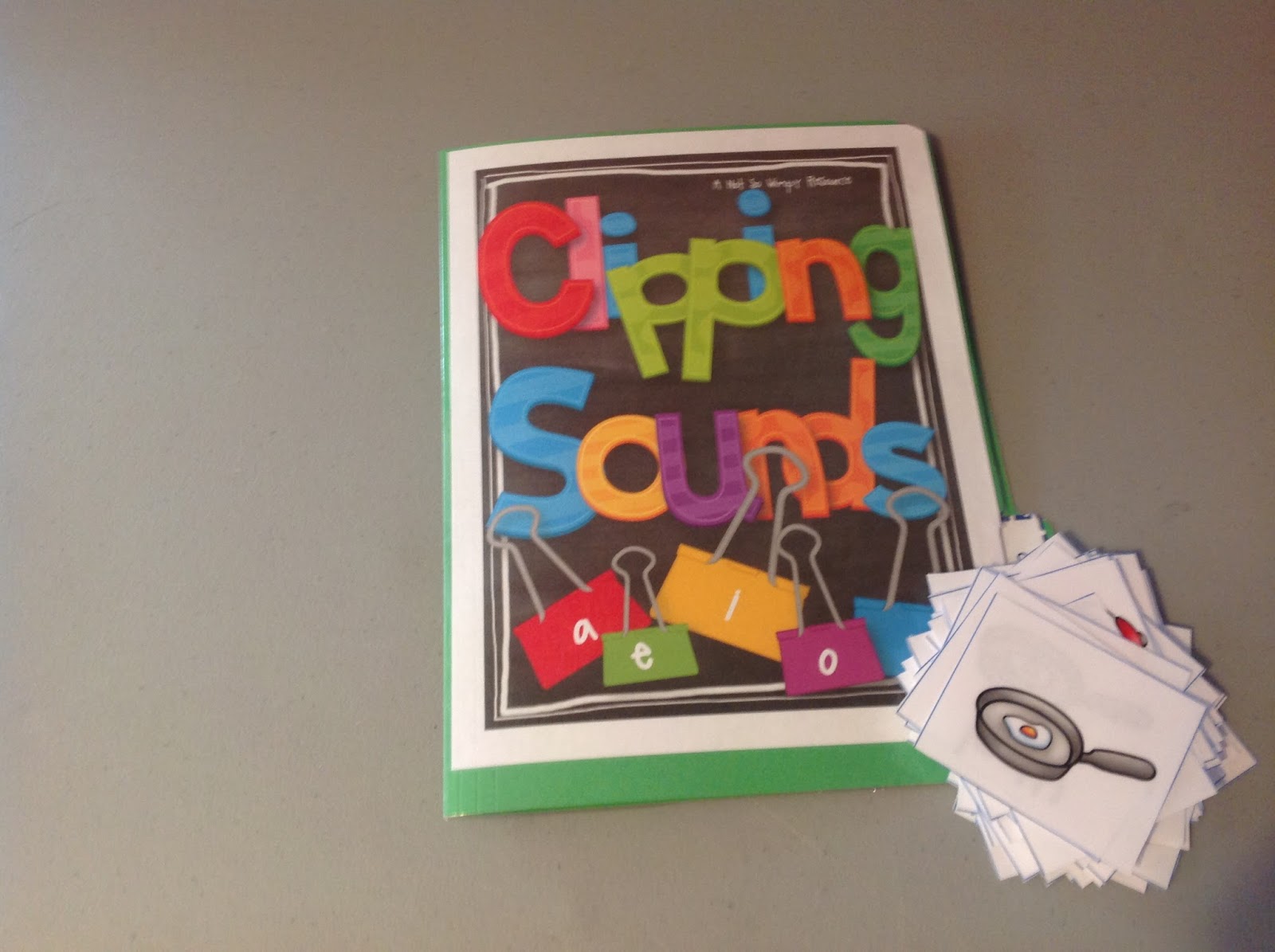
Clipping Sounds is great for discriminating sound. Students complete the sort based on the sound they hear and place their picture cards over the correct short vowel. 


  View Here. Click HERE to purchase the BUNDLED SET

Students can self-check once they are done by matching the word cards and the picture cards. 


 Writing Words is great for students to practice both initial consonant/ blend sounds and short vowel sounds. 

View Here. Click HERE to purchase the BUNDLED SET

 This two-step game provides students the opportunity to write the words they have created in a writing sort. I use a re-usable dry erase pocket for games like this to save on resources. 

 There are three different Writing Words games in this bundled set. 


 Students will love making ice cream sundaes while they practice spelling words! Students use the ice cream scoops to spell the picture on their bowl. 

 They can self-check by matching the banana to their bowl of ice cream! 


View Here. Click HERE to purchase the BUNDLED SET


You can purchase the Word Study Binder Buddy alone or as a bundled set! The bundled set will include all of the games posted above! All of my games are easy to create (simple to print, cut and paste). I understand that even after you purchase this set, you still have to print it out and spend time assembling which is why I offer them at a lower price. 

Enjoy : ) 

 photo thisone.png

Pin It
Visit my TPT for more resources and activities. Be sure to follow my store to get regular updates on new items added to my store. Pre-K, Kindergarten, First, Second, Third, Fourth, Fifth, Sixth, Seventh, Eighth, Ninth, Tenth, Eleventh, Twelfth, Higher Education, Adult Education, Homeschooler, Staff - TeachersPayTeachers.com

Friday, July 19, 2013

The Daily Five in Action (Resource Guide)


Don't forget to subscribe to my email list and follow my TPT Store. Please follow me on Blog Lovin' to receive regular updates on my new blog posts. 

Welcome to my book study on  The Daily Five. Read past posts here: 


Chapters 4-7 discuss how you can implement the D5 in your classroom. These chapters serve as an excellent resource; they have great lesson ideas and even provide a sort of script for when you introduce these routines to your students.

I have to be honest. When I first wrote this post, I summarized chapters 4-6. As I came up on the end of chapter 6 I asked myself, is this beneficial and would I read this if it was posted by someone else??? I want to provide information that is useful and relevant to my readers. At this point, after I deleted what I wrote, I really believe that anything else  you get from the book should probably come first hand. The summary benefited me because it helped me to digest the information. But if this is something you are interested in doing, reading a summary of the process isn't enough. Primarily because chapters 4-6 discuss implementing the program-- explaining what it looks like in action and will answer your questions directly in chapter 7 which focuses on troubleshooting the D5 in action. For a brief summary and discussion of key points chapters 1-3 click here. There are also several blogs that have detailed information on The D5 chapters 4-7. So, I figured I would do something a little different.

Consider this post as a guide for anyone who is interested in doing D5 in their classroom. I really think it will be more resourceful if I share links to great resources that will help you get started in September. I initially wanted to make my own resources....which I will probably do eventually. But for now, why reinvent the wheel???! There are a ton of FREE resources that are well-done and ready to go on TPT. Here are some of my favorite links both on TPT and Pinterest.


Update!! 

First Grade in Foxwell Forest will be hosting a monthly link up where teachers can share their D5 experiences, lessons and resources. Her first post already has a some great freebies, check it out here!  Feel free to hop on over to link up and/or visit other bloggers who are doing D5 in their classrooms. Click the image to visit her blog. And, don't forget to check out the freebies I've found below : ) 


FREEBIES ON TPT: 


Daily 5 Cards (Frogs)
By Faith Wheeler


Daily 5 Praise Necklaces
By: Spotted in First Grade


Daily 5 Detectives Read to Self FREEBIE
By: Gina S


Daily 5 Goodies
By: Lori Rosenberg - Teaching With Love and Laughter


Daily 5 Clip Chart Rotation
BY: Mel D


Daily 5 & Cafe "I Can" Posters
By: Mrs McDavid


Read to Self Conferencing Checklists for Daily 5
By: Kelly Findsen


ANCHOR CHARTS AND MORE ON PINTEREST


Click HERE to visit my Pinterest board full of resources 

 photo thisone.png
Pin It
Visit my TPT for more resources and activities. Be sure to follow my store to get regular updates on new items added to my store.
  Pre-K, Kindergarten, First, Second, Third, Fourth, Fifth, Sixth, Seventh, Eighth, Ninth, Tenth, Eleventh, Twelfth, Higher Education, Adult Education, Homeschooler, Staff - TeachersPayTeachers.com

Tuesday, July 16, 2013

Daily Five Book Study: Key Materials, Concepts, and Routines for Launching the Daily Five


Don't forget to subscribe to my email list and follow my TPT Store. Please follow me on Blog Lovin' to receive regular updates on my new blog posts. 

Welcome to chapter 3 of The Daily Five. Read past posts here: 


So I made the decision to plow through this book and finish it before posting my article on differentiating instruction. I actually think this book review is a great segue into what why I wrote and would like to share about differentiation anyway.

As I review chapter 3 of the Daily Five can I just say that if you are finding these posts informative, helpful or interesting you definitely need to buy the book! There is so much information, so many "gems" or "nuggets of information". I can share what resonates with me but the whole book is full of great information!!

Chapter 3 opens with a meaningful quote, "When we follow routines day after day, our students can use their energy to grow as readers and learners rather than to figure out what we expect them to do. And we in turn, can focus our energy on teaching, not managing, our independent learners." ((bravo!!)) GREAT QUOTE. And so perfect for explaining a major component of my philosophy of teaching. I am a systems and routines person. When students know what to expect, when they know where they are supposed to be and what they are supposed to be doing, they have a greater opportunity to find success. AND, they are easily held accountable for their actions. AND, teachers can continue to raise the bar, setting high expectations, and students can work at their academic pace to meet and exceed those expectations!

So how do you do this? As stated in the D5 text, these seeds are planted on the first day of school. You do it by:

  • Establishing a gathering place for brain and body breaks 
  • Developing the concept of "good-fit" books through a series of lessons
  • Creating anchor charts with students for referencing behaviors 
  • Short, repeated intervals of independent practice
  • Calm signals and check-in procedures
  • Using the correct model/incorrect model approach fro demonstrating appropriate behavior 
Establishing a Gathering place
  • "A gathering place is an open space large enough for the whole class to come together and sit on the floor."  
All of your resources are readily available at this meeting place; including your teaching charts, poem/song charts, whiteboard or area to write/ model, projector  and anything else you need to teach your short lesson. I already do this in my classroom. I also use this space for community meeting (a component of a responsive classroom) and for read alouds. I love having the students gather on the rug, it makes for easy conversation and easy redirection. When I taught third grade I did a poem a week on the rug (in our community area) that focused on phonics skills, vocabulary, parts of speech and figurative language. I also did a daily message. I know that I will go back to this concept in second grade. My brain is still figuring out how to make this all part of one fluid literacy block...when I finalize that concept I will definitely share it here on my blog.

Good-fit Books

  • "One of the most important things to do to become a better reader is to read good-fit books." 
This is definitely a section you have to read on your own to get the nuggets that they share in this book. A good-fit book is a book that is interesting, serves the correct purpose, can be understood, and can be easily decoded by the reader. There are five ways to choose a good book, The Sisters used an acronym:
  1. I choose a book
  2. P urpose- why do I want to read it? 
  3. I interest- Does it interest me?
  4. C omprehend- Am I understanding what I am reading? 
  5. K now- I know most of the words.
Click here for a free I PICK bookmark that you can use with your students (especially if you are a using my Super Kid themed classroom : ) 
  • The Sisters did a great lesson on introducing a good-fit book using several pairs of shoes. I will definitely do this on the first day of school. I would suggest reading the book to get the total scoop. They talked about this concept on several pages and I feel like the specifics should come from a direct read. The gist of it was teaching kids to choose a book that fit their needs (like how you choose shoes to fit the occasion). It is an interactive way to engage students and it is really drives home the need to importance of choosing a "good-fit" book.
Setting Up Book Boxes

I have one word.....cha-ching! Students need the opportunity to book shop or choose from a wide variety of children's literature.

I definitely need to tap into my resources for purchasing more picture books that are appropriate for those students reading on a k-2 reading level! I will be spending more money on books this year than on anything else. I will continue to add some of my favorite books to my Amazon Book Store and I will also continue to write book reviews. (Coming soon: Officer Buckle and Gloria <<<<< I will be using this as one of my first day of school read alouds).  


I usually refer to anchor charts as learning charts. "These are large charts created based on what children have to say (page 35). They are great for archiving mini lessons and can be used as a visual reference. One thing that The Sisters highlighted that really resonated with me was that, "students can remember where they were sitting at the time the charts were created, thus constructing memories, schema, background knowledge, and background experiences that become the multidimensional layers each one uses to create meaning and understanding in his or her educational life." They also stated that they refer to the anchor charts as I-Charts (the I is for independence). Conversations with the students can be documented on an I-Chart and used as a reference later.

Short Interval of Repeated Practice

This is probably the heartbeat of the D5. Students need time to practice strategies for reading and it is important that they practice good habits when practicing the strategies. The Sisters highlighted that when you set short intervals, it is best for students to give it their all for that short amount of time rather than go for a longer period and be somewhat distracted, tired, or not as focused. This is because they could start to fall into bad habits and we don't want them to practice doing things wrong. They say for the younger kids, start at three minutes, let them go (get out of the way), work on building stamina and as they show independence increase the interval. Again, very informative section. They also discussed muscle memory and how it impacts student learning. They shared ways to improve it. I found this very interesting.


  • Ten Steps to Improve Muscle Memory
    1. Identify what is to be taught.
    2. Set a purpose and a sense of urgency.
    3. Brainstorm behaviors desired on an I-chart. 
    4. Model most desirable behaviors. 
    5. Incorrect model: least-desirable behaviors, then model most- desirable behaviors. 
    6. Everyone practice and build stamina (3 minutes).
    7. Teacher stays out of the way.
    8. Quiet signal- come back to group. 
    9. Group check-in--"How do you do?"
    10. Repeat 1 through 9. 
Signal and Check In

Teaching students how to share their progress is important. It helps the teacher get a quick sense of the status of the class. After working independently, asking the students to share their level of effort promotes reflection and accountability.

Correct Model/ Incorrect Model

To be honest, I've always modeled what I wanted the students to do but I never modeled what I didn't want them to do. This is a perfect way to break bad habits and "set them straight". This is a moment where teachers can highlight typical behaviors, discuss why they don't work and create an experience that teachers and students can refer to again later...."Remember when we discussed...". The Sisters stated, "The beginning of the year is all about establishing routines, defining expectations, practicing behaviors, and building stamina with children within the Daily5 framework, and it takes lots of discipline on the children's part as well as the teacher's."

This concludes part one of The Daily Five. Part II of the book discusses The Daily Five in Action. I have my pen, highlighter, post-its, and flags all ready to go and for chapter 4. Check back tomorrow because I plan on posting my notes ASAP! I need to finish this book this week so that I can dive into The Cafe Book and get my binder together!! 

Do you do D5? If so, what does it look like in your classroom? Do you have a photo or a link you would like to share? If you do not do the D5 (yet), what questions do you have about getting started? Join in on the discussion, leave your comment below: ) 

Here are the links I shared in the content above : 

Buy The Daily Five: Shop on Amazon
Buy The Cafe Book: Shop on Amazon
Children's Books: Shop Amazon


 photo thisone.png
Pin It
Visit my TPT for more resources and activities. Be sure to follow my store to get regular updates on new items added to my store.
  Pre-K, Kindergarten, First, Second, Third, Fourth, Fifth, Sixth, Seventh, Eighth, Ninth, Tenth, Eleventh, Twelfth, Higher Education, Adult Education, Homeschooler, Staff - TeachersPayTeachers.com

Monday, July 15, 2013

"Principled Habits: Trust, Choice, Community, Urgency, Stamina, Staying Ot of the Way

Don't forget to subscribe to my email list and follow my TPT Store. Please follow me on Blog Lovin' to receive regular updates on my new blog posts. 

Welcome to chapter 2 of The Daily FIve. If you missed the post I shared on chapter 1 click HERE. 


The Daily Five encompasses 6 "Principled Habits":

  • Trusting students
  • Providing choice
  • nurturing community 
  • creating a sense of urgency 
  • building stamina
  • staying out of students' way once routines are established  (page 18)
It is explained in the text that these principles are essential to the Daily Five. 

TRUST
  • "Meaningful learning requires respect between the teacher and students as well as among the students themselves." 
  • "Taking time to build trust and demonstrate and caring is the foundation upon which all other elements of our literacy learning are built." 
  • "As William Bridges says in Managing Transitions, "Without trust in the teacher, the step toward independence and the mastery of a new skill is less likely to happen. At that moment, with fear balanced against hope, it is trust that makes the difference" (p.108)" (page 18)
  • When trust is combined with explicit instruction, our students acquire the skills necessary to become independent learners. 

I believe in building a strong classroom community through the responsive classroom approach. A responsive classroom promotes a kind, safe, respectful, and predictable environment. It is embraces cultural, academic and developmental differences and encourages collaboration/ cooperative learning by developing students' social and emotional growth. A strong component of building a responsive classroom is establishing trust. Students need to feel safe to take academic risks and explore things that may be out of their comfort zone. I made this connection while reading chapter 2. What I like about the Daily Five is that it is an academic regimen that teaches the "whole child"; it is about not just transferring information, but teaching kids to process and apply what they are learning in the class and in real world situations. This is also an important component of differentiating instruction (which I will be writing about next week). The Daily Five concept so far is fitting right into what I believe are important components of classroom instruction. 

CHOICE
  • Students crave structure and routine. The Daily Five requires a system that is slightly different than one that you would find in a typical school day. "The most pronounced difference for students is the choice they have over the order in which they'll participate in the Daily Five activities. During the literacy block, the five tasks are taking place simultaneously: 
    • Reading to self
    • Reading to someone 
    • Listening to reading 
    • Working on writing 
    • Spelling/word work 
  • "Students plan their day with a few important questions in mind:
    • What are my goals in reading and writing?
    • What will I do first?
    • Whom will I work with?
    • What will I accomplish? 
    • What was I working on yesterday that I want to continue today
  • "Choice is highly motivational and puts children in charge of their learning...
(page 20)

Student choice is empowering and I as I read this section I first thought about how I would do this. I normally don't allow students to begin choosing their own centers until mid year once they are "trained" to move throughout the room with control. So I am thinking about what my first 3-4 weeks of school will look like to start preparing them for this type of autonomy sooner. I also thought about how I implement Student Led Parent Conferences (SLC) in my classroom. Through SLC's students develop interactive portfolios that includes student friendly data, student work and reflective writing. How will I collect data using the Daily Five? I like that the students ask themselves a set of questions at the start of the day and I am thinking about what this can look like. Will there be a daily check-off, is there a daily writing prompt that encourages them to reflect on these ideas? What is a second grader capable of doing in September and how will I foster this independence as the year goes on? How can I include this in my student-led conferences/ interactive portfolios? I like the idea of student choice and I look forward to reading up on the different strategies that I can use to implement this in my classroom. 

COMMUNITY 
  • "Creating and maintaining a healthy classroom culture."
  • "A sense of community provides members with ownership to hold others accountable for behaviors of effort, learning, order, and kindness." 
  • "...the community will join together to encourage, support, and hold [this child] accountable for his or her learning behavior." (page 22) 
This goes back to establishing a responsive classroom. 

SENSE OF URGENCY
  • "Creating urgency in earning establishes a culture where every moment of learning and practicing counts for students and teacher. "
  • "We believe that when people understand the reason for a task, it establishes motivation and becomes a force that keeps them persevering."
  • When teaching each one of the Daily Five, start with explicitly teaching why: 
    • You read to yourself
    • You read to someone 
    • you listen to reading 
    • you write
    • you do work
(page 22) 

Students have to understand the why. They also have to understand that "every minute counts". When students have a sense of urgency, I have seen this minimize behavior distractions significantly not only in my class but in my colleagues' classrooms. One colleague of mine who taught second grade this year implemented the Daily Five in her class and she had some very challenging behaviors in her classroom. Although she still had to redirect and discipline from time to time, overall her classroom climate was focused and on task during instructional time. I say this because I teach in a Philadelphia public school- which has limited resources. It is important that when I look at different theories, teaching strategies, etc. I have to ask myself, "is this realistic for the environment in which I teach?" I would never doubt the ability of my students and I would never put a cap on what I think they are capable of learning. But I have to be realistic when choosing a program or resource because I have to make sure that what I use can realistically meet their needs. And if it doesn't, I evaluate where I need to tweak it so that it does. I remember in college watching short video clips that modeled teaching styles or routines, etc and there being these large classrooms filled with tons of resources and maybe five very well-behaved students. That isn't realistic...not for me anyway... not in a sense where when I am doing small groups there aren't any other students in the room or, that I have a huge classroom. So when I view video clips, read textbooks, listen to PD's I always take in the content and then plan on how I can make this work in my classroom. I say this to say that I've seen parts of the Daily Five in action and I look forward to how this teaching model will have a positive impact on my 2nd grade class. I always teach with a sense of urgency- I constantly emphasize why they need to take their learning seriously. That is a part of my teaching style. But again, I primarily worked with older kids, I taught 4th and 6th over the last 8 years so establishing a sense of urgency within my students sometimes takes a lot of work, work that I love, but I have to mold them into being independent workers- which can take up to about December at times...just being honest. I look forward to working with the younger students and I think successfully laying this foundation and sense of urgency for learning and taking learning serious in the early years is powerful. 

STAMINA
  • "The stamina needed for Daily Five is much like the stamina needed for physical exercise."
  • "If we start with a task that children have no stamina for or lack the ability to do, they are not only doomed to frustration and failure, but why would they ever return to that activity on their own?"
  • Teachers must, "lay the foundation for success, support them, cheer them on, and help them succeed."
  • "Just like with soccer practice, children cannot become better readers, make standards, and develop a love for reading when we are giving them only 7 minutes a day to do it. If we are instructing so much that the students don't get a chance to read, or if we are counting working in a workbook as reading time, then we're not giving them enough time to become better readers and writers." 
I guess the easiest way to make sense of this is if you only run a mile when working out, if you enter a marathon and have to run 26.2 miles you will be significantly unprepared to "run the distance." Stamina is important for all of the reasons stated above. It is also very important for students to find success on standardized tests (those passages are long...). 

STAY OUT OF THE WAY
  • "We had unwittingly taught them to rely on our reinforcement to keep them on-task. They were not the least bit independent." 
Students only truly have independence when they are capable of managing themselves. Establish systems that the students can manage and not only do you make your job easier, but you empower the students to encourage and/or accept accountability. 

Are enjoying my book notes? If so, check back on Wednesday for a new update. 

What are your thoughts? How is this relevant? Do you use Daily Five? If so, what has your experience been like? Please share your thoughts, links and/or resources in a comment below. 


If you are interested in reading along, visit amazon to get your copy today.


 photo thisone.png
Pin It